
High porosity hair: signs, routine, and products
High porosity hair has a raised, open cuticle. Moisture rushes in and rushes back out. The strategy is to fill the gaps and seal everything in.
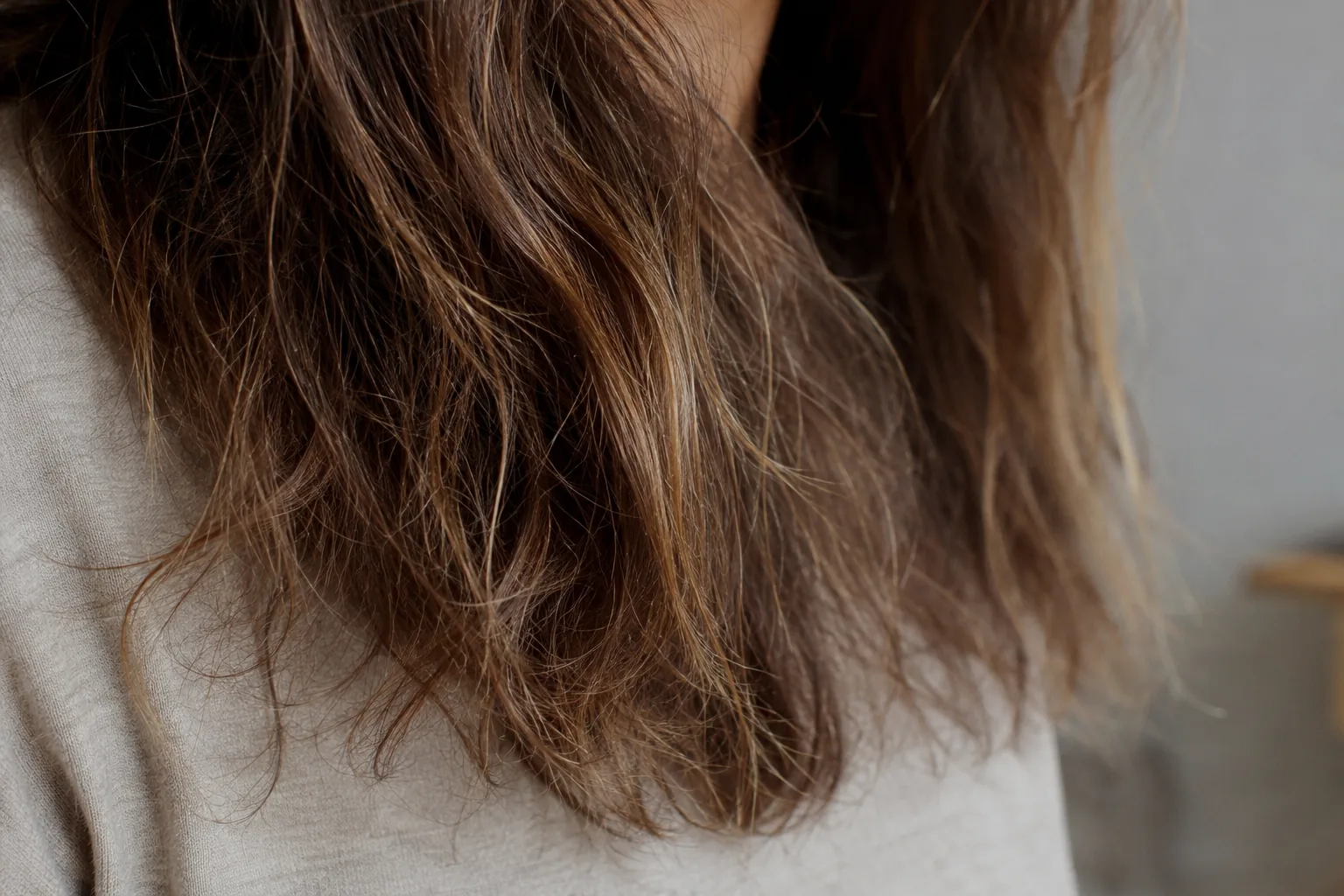
Signs of high porosity hair
Porosity is just how easily your hair lets water and product move in and out. On high porosity hair the cuticle, the outer layer of overlapping scales, sits raised and has gaps in it. Picture roof shingles that have lifted at the edges. Water and product slip in quickly through those openings, but they slip back out just as fast. That single trait explains almost everything else about how this hair behaves.
You probably have high porosity hair if you recognize most of these:
- It dries very quickly, sometimes before you have finished your routine.
- It frizzes easily and tends toward dryness no matter what you try.
- It tangles and knots more than you would expect.
- It drinks up oils, creams, and leave-ins, yet still feels thirsty an hour later.
- The strands can feel rough or a little rugged when you run your fingers down them.
The defining issue with high porosity hair is not getting moisture in. That part is easy. The challenge is getting it to stay. Every smart choice below is about closing the cuticle and sealing the door behind the water.
What causes high porosity
Porosity is partly something you are born with. Some people simply have a naturally more open cuticle. But for most people, high porosity is earned over time through things that lift or wear down the cuticle. The more of these your hair has been through, the more porous it tends to become:
- Coloring and especially bleaching, which open the cuticle on purpose to work.
- Frequent heat styling with blow dryers, flat irons, and curling wands.
- Chemical relaxers and other strong chemical services.
- Sun and UV exposure over many seasons.
- Hard water, which leaves mineral buildup and roughens the surface.
- Rough handling: aggressive brushing, tight styles, and harsh towel drying.
The good news is that damage-driven porosity responds well to care. You cannot un-bleach a strand, but you can fill the gaps, smooth the surface, and protect what you have so new growth comes in healthier.
The high porosity routine
A routine that works for high porosity hair does two jobs in order: it strengthens and patches the cuticle, then it loads the strand with moisture and locks that moisture in. Here is the shape of it.
- Use protein or bond-building treatments. Hydrolyzed proteins and bond builders temporarily fill the gaps in a raised cuticle and reinforce the strand. This is why high porosity hair so often loves protein when low porosity hair shies away from it.
- Layer moisture, then seal it. Use the LOC or LCO method (explained below) so a water-based leave-in is followed by a richer cream and a sealing oil. The seal is the whole point for this hair type.
- Reach for richer textures. Heavier creams and butters such as shea, plus sealing oils like argan, castor, and jojoba, give high porosity hair the staying power it needs.
- Finish with a cool rinse. Ending a wash with cool water helps the cuticle lie flatter, which traps more moisture inside.
- Mind humectants in humidity. Humectants pull water from the air. On open, porous hair that can mean too much water rushing in and frizz on the way out, so seal humectants under an oil or cream on humid days.
- Cleanse gently and do not over-wash. Harsh, frequent washing strips the little moisture this hair manages to hold. Space out wash days and lean on gentle or co-washing where it suits you.
Not sure whether you lean high or low? Compare against the low porosity hair routine, which is built around the opposite cuticle and a much lighter touch.
The LOC and LCO methods
LOC and LCO are two layering orders that both aim to lock moisture into the strand. The only difference is the order of the last two steps, and the letters tell you everything:
- LOC = Liquid, Oil, Cream. Start with a water-based liquid or leave-in, apply an oil, then top with a cream.
- LCO = Liquid, Cream, Oil. Start with the same water-based liquid, apply a cream, then finish with an oil as the outermost seal.
In both cases the liquid delivers the actual moisture, and the oil and cream are there to trap it. High porosity hair usually does best with heavier sealing, and many people with this hair type find that ending on an oil (the LCO order) gives the most lasting hold because the oil sits on the very outside and slows water loss. Try both and watch which one keeps your hair soft longest. There is no single right answer, only the one your hair prefers.
A simple memory trick: the liquid is the water you are trying to keep, and the oil and cream are the lid. High porosity hair just needs a heavier lid than most.
Ingredients to look for
You do not need a long shelf of products. You need the right few. When you read a label, these are the things that earn their place on high porosity hair:
- Hydrolyzed proteins for bonding and strength, since they temporarily fill the cuticle gaps.
- Shea butter as a rich, holding moisturizer for thirsty strands.
- Ceramides to help reinforce and smooth the cuticle.
- Sealing oils such as argan, castor, and baobab to lock everything in as the final step.
If you are deciding whether your hair is calling for protein or moisture on a given week, the hair elasticity test is a quick way to read the strand and choose.
Products that work
Below are the kinds of products that suit high porosity hair, described by type rather than brand so you can match the idea to whatever is available to you. Look for these roles in your routine and pick the formula that fits your texture and budget.
Heads up: the links below are affiliate links. If you buy through them we may earn a small commission at no extra cost to you, and we pick by fit, not by commission.
Frequently asked questions
How do I know if I have high porosity hair?
Tell-tale signs are hair that dries very fast, frizzes easily, drinks up product but still feels dry, and a history of color, bleach, or heat. The float test (a strand sinks) and the quiz confirm it.
Does high porosity hair need protein?
Usually yes. Protein and bond-builders temporarily fill the gaps in a raised cuticle, which is why high porosity hair often responds well to them. Balance protein with plenty of moisture so it does not feel brittle.
What is the LOC method?
LOC stands for Liquid, Oil, Cream, the order you layer products to lock moisture into the strand. High porosity hair often does best with this kind of heavier sealing routine.