
Porosity for curly, coily, and 4c natural hair
Tighter curl patterns make porosity the single most useful thing to know about your hair. Curly hair porosity and 4c hair porosity have their own quirks, so here is how to test it and what to do with the answer.
Why porosity matters for natural hair
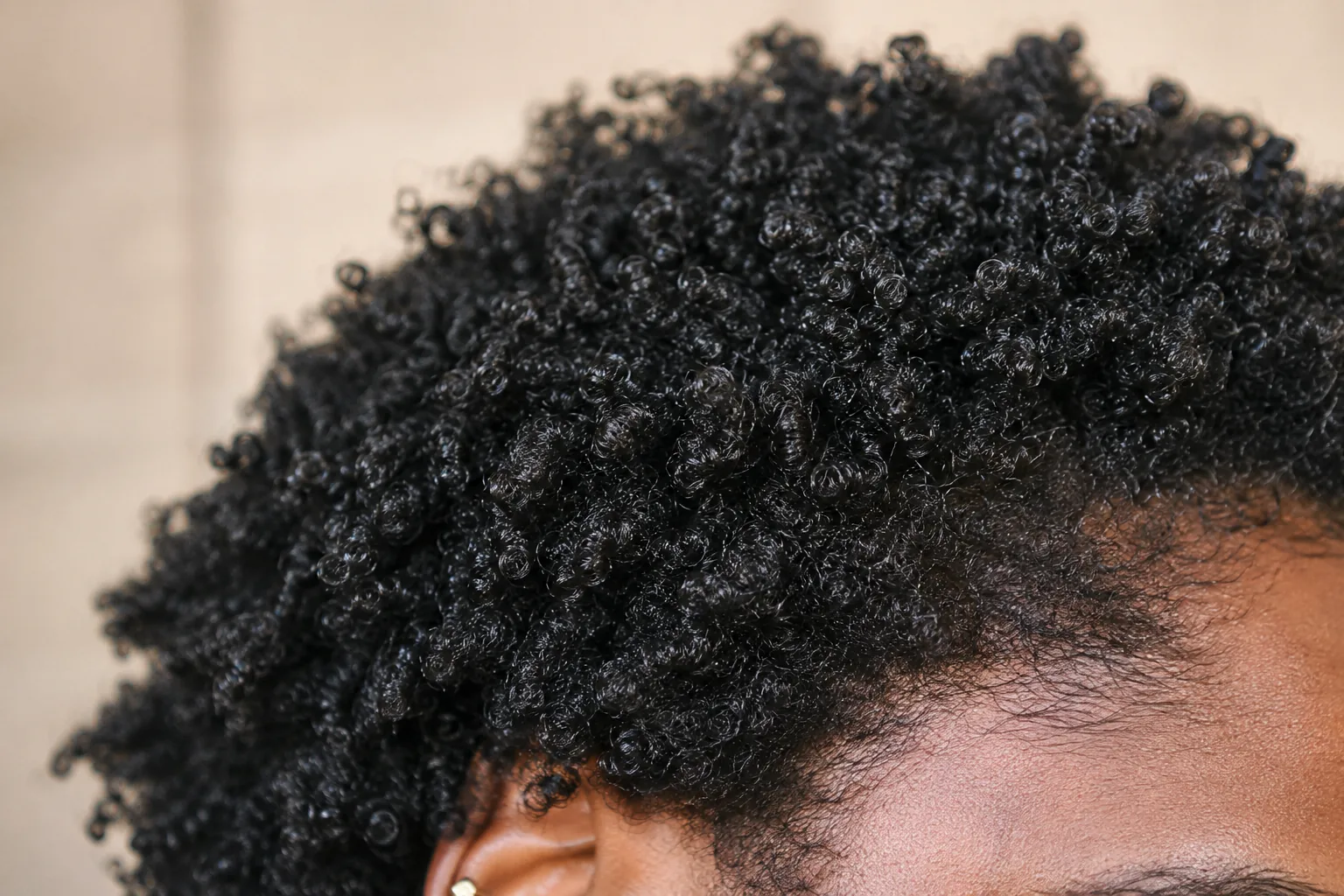
If you have curly, coily, or 4c hair, porosity is probably the most useful single fact you can learn about your strands. Here is why. The natural oil your scalp makes, called sebum, travels easily down a straight strand and coats it from root to tip. The tighter your curl pattern, the harder it is for that oil to make the same journey. Every bend and coil is a place where the oil has to navigate a sharp turn, so it tends to stay up near the scalp instead of reaching the ends.
That is the real reason curly and coily textures lean dry. It is not a flaw in your hair, it is simple geometry. And because your hair cannot rely on its own oils the way straighter textures can, it leans much more heavily on the products you choose and on how you layer them. That is exactly where porosity comes in. Porosity tells you how open or closed your cuticle sits, which decides whether moisture gets in, whether it stays in, and which products will actually do something rather than sit on top or wash straight out.
Knowing your porosity is the fastest way to stop wasting money. Two coily heads can look similar and still need almost opposite routines. Without it, you are working blind. With it, you can walk past most of the shelf and reach for the few things built for your cuticle.
Is 4c hair always high porosity
This one deserves an honest answer, because the internet often gets it wrong. You will see it stated as a fact that 4c hair is high porosity. It is true that tightly coiled and 4c hair is often higher porosity, and there are real reasons for that. Some of it is genetic. A lot of it comes from everyday life: color and bleach lift the cuticle, heat styling weathers it, and the constant manipulation that comes with detangling, styling, and protective styles adds wear over time. All of those things nudge hair toward higher porosity.
But often is not always. Plenty of coily and 4c hair is low porosity, and plenty sits in the medium range. If you assume you are high porosity when you are actually low, you will pile on heavy proteins and rich butters that your tight cuticle never lets in, and your hair will feel coated and dry at the same time. The fix is simple: test your own hair instead of inheriting a label. Your strands will tell you the truth in a way a curl-type chart cannot.
How to test coily hair
The classic float test still works on coily hair: drop a few clean, dry shed strands into a glass of room-temperature water and watch what they do. Floating points to low porosity, sinking points to high. The catch is that very fine or very curly shed strands can be hard to read. They tangle, they trap air, and a single coil can behave unpredictably. So treat the float test as one signal, not the final word.
For coily textures, observation usually tells you more than a glass of water. Watch how your hair behaves day to day:
- Dry time. If your hair takes a long time to air-dry, you lean low porosity. If it dries fast, you lean high.
- Water response. Mist a dry section. If water beads up and rolls off, that points low. If it soaks in almost instantly, that points high.
- How it takes product. Products that sit on top and feel greasy suggest a tight, low porosity cuticle. Products that vanish in and leave hair thirsty again quickly suggest high porosity.
The reason the free quiz works well here is that it weighs all of these signals together instead of leaning on one tricky test. If you want a second opinion after the quiz, the full water test guide walks through the float method in detail.
Building your routine
For curly and coily hair the headline is always the same: moisture first. Because your natural oils struggle to reach the ends, you add and seal moisture yourself. The most reliable way to do that is a layering method, usually called LOC or LCO. The letters are the order you apply three things:
- L is Liquid. Water or a water-based leave-in to actually hydrate the strand.
- O is Oil. A light oil to help slow water loss.
- C is Cream. A cream or butter to seal everything in.
LOC and LCO are the same three steps in a different order, and which one suits you often comes down to porosity, so experiment. Around that core, a few habits make the biggest difference:
- Deep condition regularly. A weekly deep treatment is the anchor of a coily routine, since these textures lose moisture fastest. If you prefer making your own, our DIY hair recipes include masks and deep conditioners sorted by porosity.
- Balance protein and moisture. Too much protein gets stiff and brittle, too little gets mushy and weak. Watch how your hair responds and adjust.
- Detangle gently on wet, conditioned hair. Slip from conditioner protects coils from breakage. Work in sections from the ends up.
- Protect at night. Satin or silk, a bonnet or a pillowcase, cuts the friction and moisture loss that cotton causes while you sleep.
- Keep heat low or skip it. Heat is one of the quickest ways to push hair toward high porosity damage.
Products by porosity
You do not need a shelf full of bottles. A handful of types covers most coily routines across porosities. Pick the version that matches your cuticle: lighter formulas for low porosity, richer and more protein-forward ones for high.
Heads up: the links below are affiliate links. If you buy through them we may earn a small commission at no extra cost to you, and we pick by fit, not by commission.
Frequently asked questions
Is 4c hair always high porosity?
No. 4c and tightly coiled hair is often higher porosity, from genetics and from color, heat, or manipulation, but plenty of coily hair is low or medium porosity. Test yours rather than assuming.
Why is curly hair more prone to dryness?
The tighter the curl, the harder it is for the natural oils from your scalp to travel down the strand. That is why curly and coily hair relies more on the right products and on layering moisture in.
How do I test porosity on very curly hair?
The float test still works, but fine or very curly shed strands can be tricky, so lean on observation: dry time, whether water beads or soaks in, and how hair takes product. The quiz weighs all of these together.