
The hair porosity water test, done right
Drop a clean strand in a glass of water and watch what it does. The water test for hair porosity is the easiest way to check your hair porosity at home. Here is how to run the float test accurately, what your result means, and when to trust it.
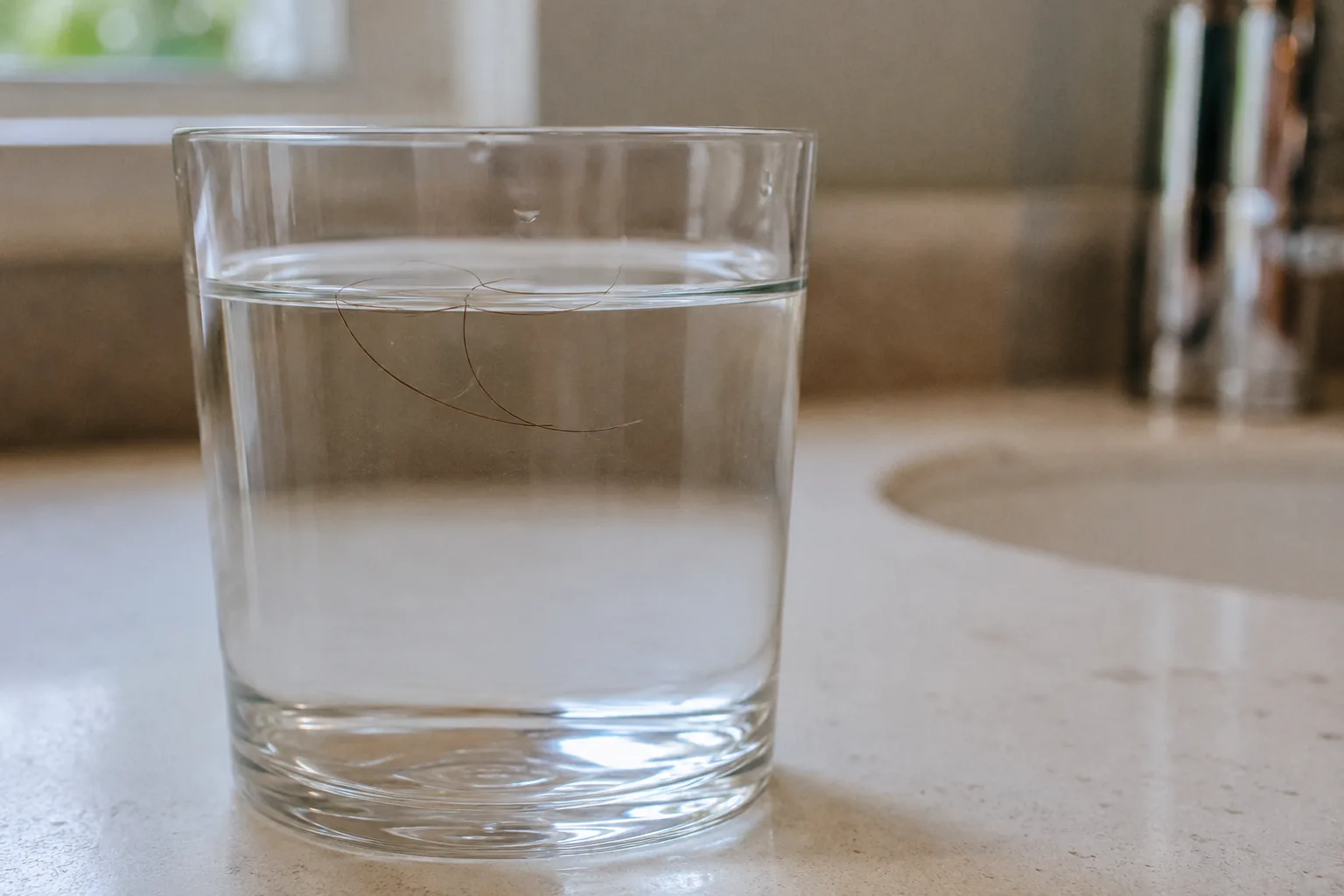
What the water test is
The water test, also called the float test, is the simplest at-home way to get a rough read on your hair porosity. Porosity describes how easily your hair lets water and moisture move in and out, and that comes down to the cuticle, the shingle-like outer layer of each strand. When the cuticle lies flat and tight, water struggles to get in. When it sits raised or open, water rushes in quickly.
The test works on a simple idea. A strand that resists water traps air and stays buoyant, so it floats. A strand that drinks water in fast gets heavier and sinks. By dropping a clean, dry strand into a glass of water and watching where it ends up, you get a quick clue about whether your hair leans low, medium, or high porosity.
It is worth being honest up front: this is a quick indicator, not a lab measurement. It is a great starting point, and it is even better when you confirm it against how your hair actually behaves on wash day. To cross-check your result, you can also take the 60-second quiz.
How to do the float test
The whole thing takes about five minutes, and you almost certainly have everything you need already. Follow these steps in order, because skipping the cleaning step is the number one reason people get a misleading result.
- Start with clean, product-free hair. Oils, leave-ins, gels, and styling product all change how a strand behaves in water. Test on a day after a normal wash, before you apply anything.
- Collect two or three shed strands. Pull them from your brush, or gather a few that come loose after washing. Using more than one strand gives you a better read than a single hair.
- Make sure the strands are fully dry. A damp strand has already started absorbing water, which can throw off the result. Let them dry completely first.
- Fill a clear glass with room-temperature water. A clear glass lets you see where the strand settles. Room-temperature water keeps things consistent.
- Drop the strands on the surface and wait. Set them gently on top of the water, then leave the glass alone for two to four minutes. Do not stir, tap, or poke it.
- Read the result. After a few minutes, note whether the strands are floating near the top, hovering in the middle, or resting at the bottom.
That waiting period matters more than people expect. In the first few seconds, surface tension can hold almost any strand up, so an instant reading tells you very little. Patience is the difference between a useful result and a confusing one.
What your result means
Here is how to translate where your strand ended up into a porosity type.
| Where the strand sits | Likely porosity | What it suggests |
|---|---|---|
| Floats on top after a few minutes | Low porosity | A tight cuticle is keeping water out, so the strand stays buoyant. Moisture is slow to get in, and product can sit on top. |
| Hovers in the middle | Medium (normal) porosity | Water moves in and out at a balanced pace. This is generally the easiest type to care for. |
| Sinks to the bottom | High porosity | An open cuticle is letting water in fast, so the strand absorbs and gets heavy. Moisture goes in quickly but can leave just as fast. |
If your strand floated, your routine will look quite different from someone whose strand sank, so it is worth reading up on your type. Start with the low porosity hair guide if it floated, or the high porosity hair guide if it sank. For a side-by-side breakdown of what each result means, see the hair porosity chart.
Why a clean strand matters
If there is one thing to get right, it is this. Product residue and your hair's own natural oils coat the strand and trap tiny pockets of air. That coating makes a strand float even when the hair underneath is not actually low porosity. It is by far the most common reason people misread the test.
Think of it this way: a freshly waxed surface beads water, while a bare surface lets it soak in. A strand carrying leftover conditioner, oil, or gel behaves like that waxed surface, repelling water no matter what the cuticle is really doing. So a strand that has not been washed can float for reasons that have nothing to do with porosity.
If your result surprises you, the fix is almost always the same: wash the strands clean, dry them fully, and run the test again. A clean, dry sample is what matters most for an honest reading.
When the float test can mislead
The float test is handy, but it is not foolproof. A few things can nudge the result one way or the other, so it helps to know what to watch for.
- Air bubbles. A tiny bubble clinging to a strand can keep it afloat regardless of porosity. If you see bubbles, gently tap the glass or run the test again.
- Surface tension. The skin-like surface of the water can trap a light strand on top for a while, which is exactly why you wait two to four minutes instead of reading it right away.
- Strand thickness. Very fine strands and very coarse strands behave differently in water, so two people with the same porosity can get slightly different floats.
- Sample size. A single hair is a small sample and can mislead. Testing a few strands at once smooths out the odd result.
None of this makes the test useless. It just means you should treat it as one clue rather than a final verdict. The most reliable read comes from combining the float test with how your hair behaves day to day, and with the on-site quiz. If the test and your wash-day experience disagree, trust the pattern you see over time.
Other at-home tests
The float test is the best known, but two quick checks can back it up. Use them together for a more confident answer.
- The spray test. Mist a small, dry section of hair with water. If the droplets bead up and roll off the surface, that points to low porosity. If the water soaks in almost immediately, that points to high porosity.
- The slide test. Take a single strand and slide your fingers up it from end to root. If it feels smooth, the cuticle is lying flat, which suggests low porosity. If it feels bumpy or rough, the cuticle is raised, which suggests high porosity.
When two or three of these tests agree, you can feel good about your result. When they disagree, that is your cue to run the quiz, which weighs several signals at once instead of relying on a single strand in a glass. The goal is not a perfect score, it is a routine that finally fits your hair.
Frequently asked questions
Does low porosity hair float or sink?
Low porosity hair tends to float on the surface, because the tight cuticle keeps water from soaking in quickly. High porosity hair usually sinks, and medium porosity hovers in the middle.
How long should I wait during the float test?
Give it two to four minutes. Reading it the instant the strand hits the water is unreliable, because surface tension can hold almost any strand up for the first few seconds.
Why did my hair float even though it feels dry?
Product residue and natural oils are the usual reason. They coat the strand and trap air, so the hair floats even if it is not truly low porosity. Always test clean, product-free strands.
Is the float test accurate?
It is a useful quick indicator, not a precise measurement. Air bubbles, residue, and small samples can all skew it, so confirm your result with the quiz and with how your hair behaves on wash day.