
What is hair porosity?
Hair porosity is how well your hair absorbs and holds moisture. It is the single most useful thing to understand about your hair, and it decides which products will work. Below we cover what it is, how to check your hair porosity at home, and how to test hair porosity with a glass of water.
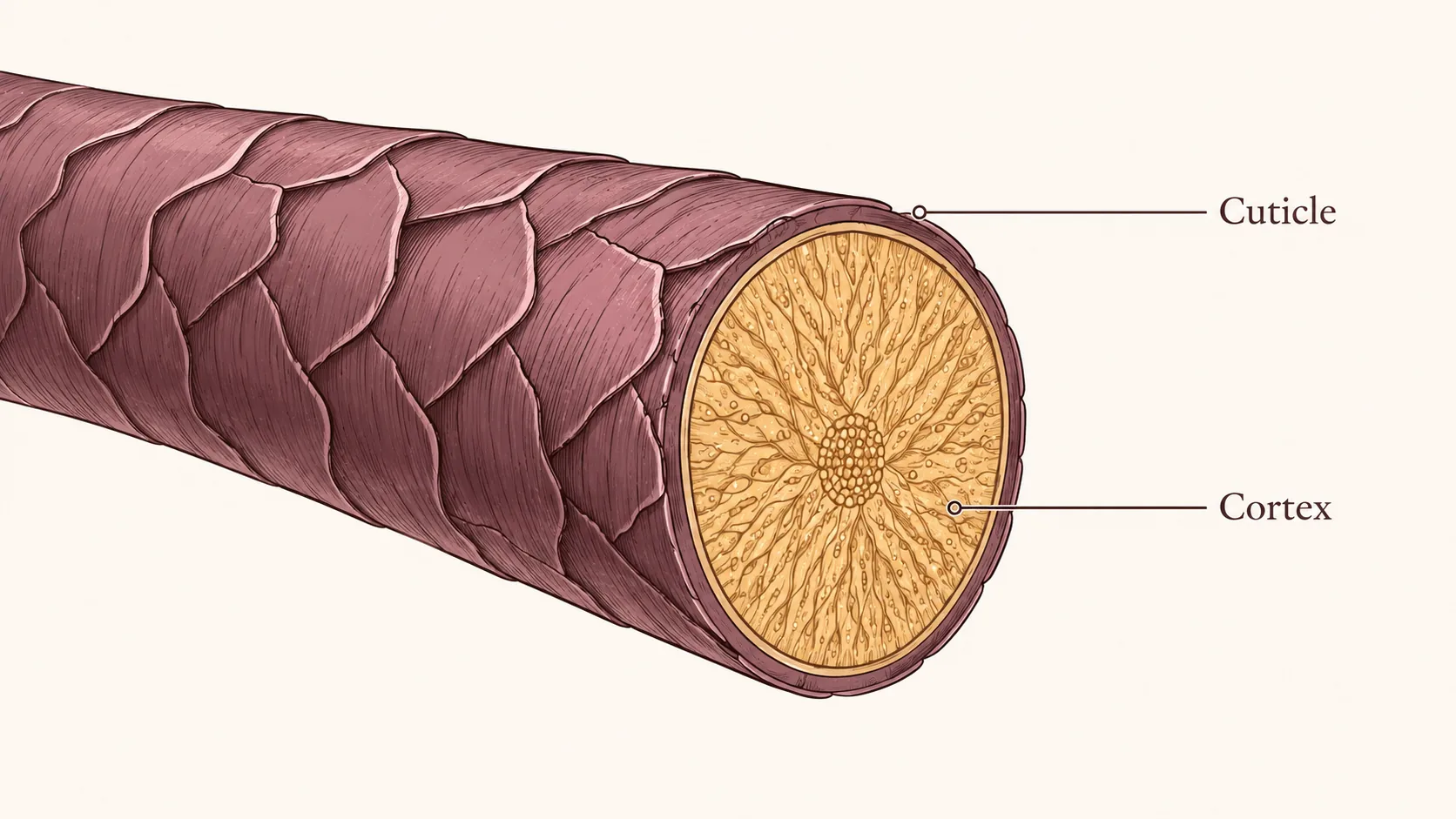
What porosity means
Hair porosity is your hair's ability to absorb and hold moisture. It comes down to one thing: how open or closed your cuticle is. The cuticle is the outer layer of your hair, made of tiny overlapping scales that lie along the strand a bit like roof shingles or fish scales. When those scales lie flat and tight, water and product have a hard time getting in. When they sit raised and gappy, moisture rushes in easily but leaves just as fast.
That is the whole idea. Porosity is not about whether your hair is dry or oily, thick or thin, straight or curly. It is specifically about the doorway: how easily moisture passes through the cuticle in both directions. Once you know how that doorway behaves on your head, almost every product decision gets simpler.
The three levels
Porosity sits on a spectrum, but it is usually sorted into three practical buckets, side by side in our hair porosity chart:
- Low porosity. The cuticle lies tight and flat, so it resists letting moisture in. Water can bead on the surface and products can sit on top rather than sinking. The upside is that once moisture does get in, this hair holds it well. See the full low porosity hair guide.
- Medium (normal) porosity. The cuticle is balanced, neither sealed shut nor wide open. This is the easy-care middle ground: it accepts moisture readily and holds it for a reasonable time, so it usually needs the least fuss.
- High porosity. The cuticle is raised and gappy, so moisture floods in fast and escapes just as fast. This hair can feel dry, drink up product, and often shows damage. See the full high porosity hair guide.
Most people lean toward one bucket, and it is common to have mixed porosity, for example, healthier mid-lengths with higher porosity at the ends where wear and tear collect.
What determines porosity
Two forces set your porosity. The first is genetics. You are born with a natural baseline, and that starting point is part of why some people's hair behaves a certain way no matter what they do.
The second force, and often the bigger one over time, is damage and lifestyle that lift or break the cuticle. Anything that roughs up that outer layer pushes porosity higher. The usual culprits are:
- Heat styling with blow dryers, flat irons, and curling tools
- Coloring, bleaching, and highlighting
- Chemical relaxers and other strong chemical treatments
- Sun and UV exposure
- Hard water and its mineral buildup
- Rough handling, such as aggressive brushing, tight styles, and harsh towel drying
None of these has to ruin your hair. The point is simply that they accumulate, and over months and years they tend to nudge porosity upward.
Can you change porosity
Here is the honest answer, because there is a lot of wishful thinking online about this.
You cannot change your genetic baseline, and you cannot truly close a cuticle that has been permanently damaged. Once those scales are chipped or worn away, no product rebuilds them back to factory condition. So claims that a single mask will permanently fix porosity are overselling things. For the full picture of what shifts and what stays fixed, see can hair porosity change over time.
What you genuinely can do falls into two camps:
- Stop it from getting worse. Minimizing damage, less heat, gentler handling, protection from sun and hard water, keeps you from raising your porosity further. This is the most powerful lever you have.
- Temporarily smooth and seal. Cool-water rinses, the right leave-ins and oils, bond-builders, and protein treatments can lay the cuticle down and fill gaps for a while, so high porosity hair behaves much better day to day even if it is not permanently changed.
People also ask the opposite question: how to increase porosity. This usually comes up with low porosity hair that struggles to absorb anything. You do not want real damage, but gentle warmth (a warm towel, steam, or applying products in a warm shower) and the occasional clarifying wash to clear buildup help product get past that tight cuticle without harming the strand.
How to test it
No single test is perfect, which is exactly why it helps to look at several signs together. The common at-home checks are:
- The float (water) test. Drop a clean, dry strand in a glass of water and watch what it does. Floating points to low porosity, sinking points to high. See our water (float) test guide for how to do it properly.
- The spray test. Mist a section and watch whether water beads on top (lower porosity) or soaks straight in (higher porosity).
- The slide test. Run your fingers up a strand toward the roots. A rough, bumpy feel suggests a raised cuticle and higher porosity.
- Everyday clues. How long your hair takes to air dry and how quickly it drinks up product tell you a lot. Slow to wet and slow to dry leans low, fast to soak and fast to dry leans high.
- The on-site quiz. Our 60-second quiz weighs several of these signs at once, which is more reliable than betting everything on one test.
If you only do one thing, take the quiz and then confirm it with the float test.
Porosity vs density and texture
Porosity gets tangled up with other hair traits, so it is worth separating them clearly. They are different things and can vary independently:
| Trait | What it measures |
|---|---|
| Porosity | How well your hair absorbs and holds moisture |
| Density | How many strands you have on your head |
| Texture (diameter) | How thick or fine each individual strand is |
| Curl pattern | The shape of the strand, from straight to coily |
| Elasticity | How much your hair can stretch and bounce back, a sign of strength |
You can have fine strands with high density, coily hair with low porosity, or any other mix. Elasticity in particular is easy to confuse with porosity because both relate to how healthy hair feels, but elasticity is about strength and stretch rather than moisture. You can check it with our elasticity test guide.
If you are still not sure where you land, the fastest way to get a real answer is to take the free porosity quiz and let it weigh the signs for you.
Frequently asked questions
What is hair porosity in simple terms?
It is how well your hair absorbs and holds moisture, set by how open or closed the cuticle is. Low porosity resists moisture, high porosity soaks it up and loses it fast, and medium sits in between.
What causes high porosity hair?
Partly genetics, but mostly damage that lifts the cuticle: heat styling, coloring, bleaching, chemical treatments, UV, hard water, and rough handling all raise porosity over time.
Can you change your hair porosity?
You cannot change your genetic baseline, and permanent cuticle damage cannot be fully reversed. You can avoid raising porosity further by limiting damage, and temporarily smooth and seal the cuticle so the hair behaves better.
How do I find out my hair porosity?
Take the 60-second quiz on this site, which weighs several signs at once, and confirm it with the float test. Dry time and how product absorbs are good everyday clues too.