
DIY natural hair care recipes, matched to your porosity
The best homemade treatment depends on your porosity. Low porosity hair wants light, water-based recipes that absorb; high porosity hair wants rich, protein-and-seal recipes that fill and lock in.
Why recipes should match porosity
The same homemade mask can be a miracle on one head of hair and a greasy letdown on another, and the difference almost always comes down to porosity. Porosity is how easily your hair takes in and holds on to moisture, and it sets the rule for which kitchen ingredients will actually do something for you.
Here is the short version, and it shapes everything below:
- Low porosity hair has a tight, flat cuticle that resists letting things in. It wants light, water-based recipes built on humectants, applied with a little warmth so the cuticle opens.
- High porosity hair has a raised, gappy cuticle that lets moisture rush in and straight back out. It wants rich, protein-and-seal recipes that fill the gaps and then lock everything in with oil.
- Medium porosity hair sits comfortably in the middle. It takes well to most recipes and just needs a balanced rotation rather than anything extreme.
Two habits make every recipe on this page work better, no matter your porosity. Always patch test first: dab a little of the finished mix on the inside of your wrist or behind your ear and wait, because eggs, honey, and even essential oils can irritate sensitive skin. And apply to damp, warm hair rather than dry, cold hair; a warm strand has a more receptive cuticle, so the treatment reaches inside instead of sitting on the surface.
You do not need a cabinet full of products. You need to match a few simple ingredients to what your hair can absorb. Light and water-based for low porosity, rich and sealing for high porosity, balanced for medium.
Recipes for low porosity hair
Low porosity hair gets weighed down fast, so the rule here is thin, warm, and water-based. Skip the heavy butters and lean on humectants, which pull moisture into the strand instead of coating the outside.
- Glycerin, aloe, and water moisture spritz. Mix roughly two tablespoons of aloe vera juice (or gel thinned with water), one teaspoon of vegetable glycerin, and the rest water into a small spray bottle. Shake and mist onto damp hair as a light daily refresher. It is almost pure humectant, so it draws water in without leaving film.
- Green-tea or diluted honey rinse. Brew a cup of green tea, let it cool to lukewarm, and pour it through clean hair as a final rinse for a light lift. Or stir a teaspoon of honey into a cup of warm water and use that the same way. Honey is a humectant that hydrates without weight.
- Light banana, honey, and warm water mask. Blend half a ripe banana with a teaspoon of honey and enough warm water to make it genuinely pourable, not a thick paste. Strain out any lumps so it rinses clean. Apply to warm damp hair and sit under a shower cap with gentle heat (a warm towel or a few minutes with a blow dryer over the cap) for fifteen minutes, then rinse. The heat is what lets a low porosity cuticle take it in.
- Apple cider vinegar clarifying rinse. Mix one tablespoon of apple cider vinegar into a cup of water and pour it through after shampooing every few weeks. Low porosity hair builds up residue quickly, and clearing it keeps the surface able to absorb your other treatments.
The thread running through all of these is the same: keep everything thin and slightly warm. The moment a low porosity recipe turns thick and cold, it starts sitting on top instead of soaking in.
Recipes for high porosity hair
High porosity hair has gaps in the cuticle, so it drinks moisture in and loses it just as fast. The recipes here are richer on purpose: they fill the cuticle, then seal it shut so the moisture stays put.
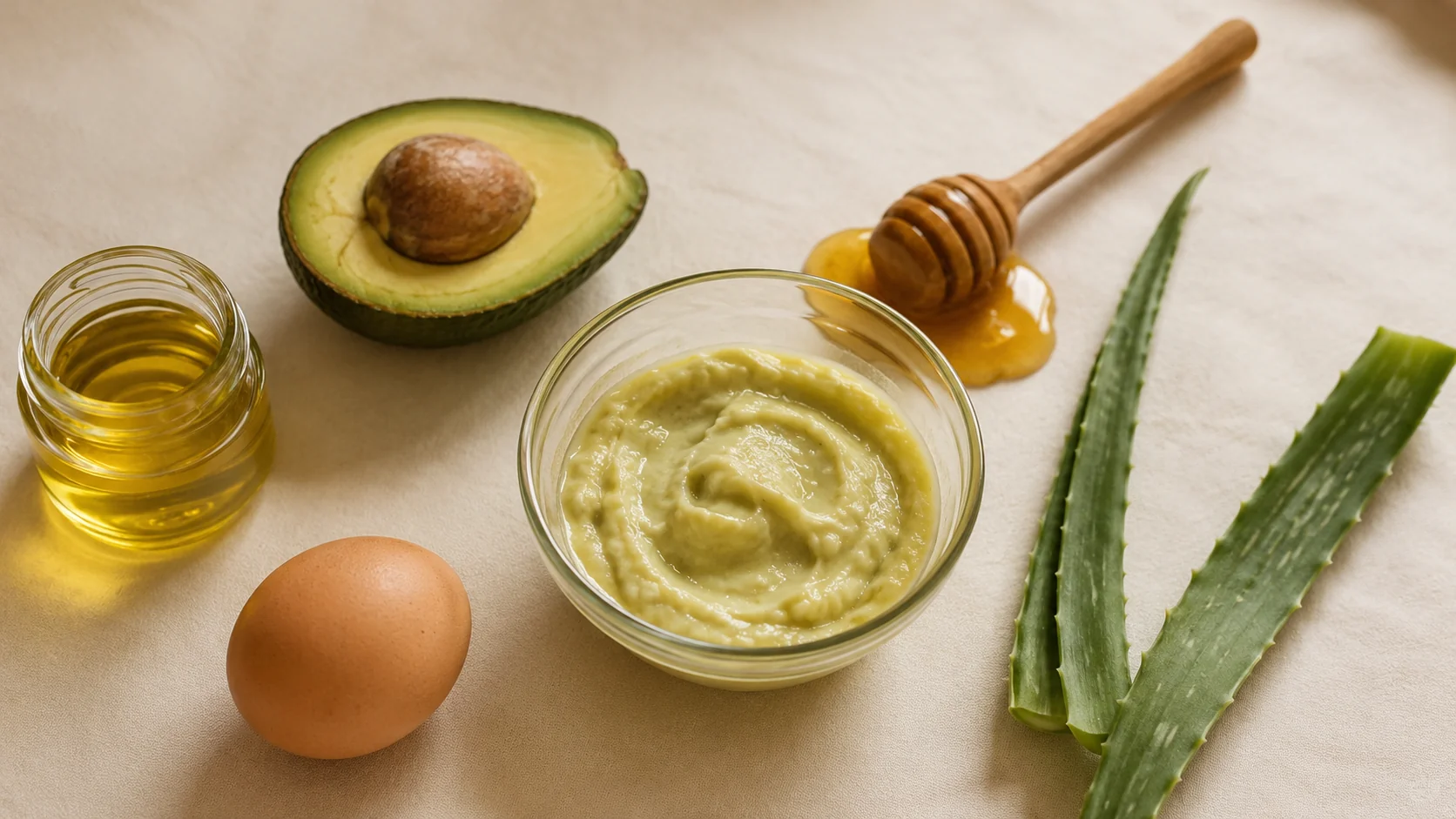
- Avocado, banana, and oil deep-conditioning mask. Blend half a ripe avocado and half a ripe banana smooth, then work in a tablespoon of olive or jojoba oil. The fruit pulp conditions while the oil seals; this is a heavy, slippery mask that high porosity hair handles beautifully. Leave it on damp hair under a cap for twenty to thirty minutes, then rinse well.
- Homemade protein treatment. High porosity hair often needs protein to temporarily patch the gaps. Beat one egg yolk (or use a few tablespoons of plain full-fat yogurt) with a teaspoon of honey and a little oil. Apply to damp hair, leave fifteen to twenty minutes, and rinse with cool water so the egg does not cook. Use this every couple of weeks, not every wash.
- Flaxseed gel for hold and slip. Simmer a quarter cup of flaxseeds in two cups of water until the liquid turns visibly slippery, then strain out the seeds while it is still warm. The result is a lightweight natural gel that defines curls and adds slip without the crunch of store-bought hold products.
- Apple cider vinegar smoothing rinse. One tablespoon of apple cider vinegar in a cup of water, poured through after conditioning, helps lay the raised cuticle flatter so the strand reflects light and tangles less.
Always seal with an oil afterward. Whatever recipe you use, finish on damp hair with a few drops of a heavier oil (castor, olive, or shea-based) smoothed over the lengths. On high porosity hair, sealing is not optional; it is the step that keeps all that moisture from escaping by the time your hair dries.
Recipes for medium porosity hair
If your hair is medium porosity, you have the easiest job of all three. It absorbs and holds moisture reasonably well, so you can use most recipes without much fuss. The goal is simply to keep it balanced rather than swinging too far toward either moisture or protein.
- Honey and yogurt moisturizing mask. Stir a tablespoon of honey into a few tablespoons of plain yogurt, apply to damp hair, leave it fifteen to twenty minutes, and rinse. It hydrates and gives a touch of light protein in one easy step.
- Occasional light protein treatment. Once a month or so, a simple egg or yogurt treatment keeps the cuticle strong without stiffening your hair the way it might on a protein-sensitive head.
- Keep a balanced rotation. Alternate a moisturizing mask one week with a lighter protein treatment a few weeks later, and pay attention. If your hair starts feeling limp, lean protein; if it feels stiff, lean moisture. Medium porosity hair tells you quickly which way to adjust.
How to use them safely
Homemade does not automatically mean gentle. A few simple cautions keep these recipes helping rather than backfiring:
- Strand and patch test first. Try a new mix on a small section of hair and a patch of skin before you commit your whole head. Eggs, honey, and essential oils are common irritants for some people.
- Do not leave protein masks on too long. Protein treatments are meant to be brief. Left on for an hour, they can leave hair stiff and brittle instead of strengthened. Fifteen to twenty minutes is plenty.
- Rinse with cool water for high porosity hair. Cool water helps the raised cuticle lie flatter, locking in what the treatment just delivered, and it keeps any egg in a protein mask from scrambling.
- Do not overdo protein on low porosity hair. Low porosity hair is often protein-sensitive. Lead with moisture and treat protein as an occasional guest, not a regular.
- Store fresh, or rather, do not store at all. These recipes have no preservatives, so bacteria grow fast. Mix only what you need and use it immediately; toss any leftovers rather than saving them for next week.
When in doubt, do less. A short treatment on warm, damp hair with a single sealing step at the end does far more good than a thick, hours-long mask that your hair was never built to take in.
A short ingredient shelf
You do not need much to cover everything above. Keep a small handful of ingredients on hand and you can mix the right recipe for almost any wash day:
- Oils. Stock one light and one heavy. Lightweight oils like grapeseed and argan suit low porosity hair because they absorb instead of coating; heavier oils like olive and castor suit high porosity hair because they seal in moisture and stay put.
- Honey, a humectant that works across all three porosities and adds a little gentle protein.
- Aloe vera (juice or gel), light and hydrating, ideal for low porosity spritzes.
- Apple cider vinegar, for clarifying low porosity hair and smoothing high porosity hair.
- Eggs and plain yogurt, your protein sources for filling and strengthening high porosity strands.
- Flaxseed, for a cheap homemade gel with natural hold and slip.
As a rule of thumb, the lighter the ingredient, the better it suits low porosity hair, and the richer the ingredient, the better it suits high porosity hair. Once that single idea clicks, you can walk into your kitchen and build a treatment without a recipe card.
Common questions
Are DIY hair masks good for low porosity hair?
Yes, if they are light and water-based. Low porosity hair struggles to absorb heavy butters, so lean on humectants like honey, aloe, and glycerin, apply to warm damp hair, and clarify regularly so buildup does not block absorption.
What is a good homemade protein treatment for high porosity hair?
Egg yolk or plain yogurt mixed with a little honey and oil makes a gentle protein treatment that temporarily fills the gaps in a raised cuticle. Use it occasionally, not every wash, and always follow with moisture and a sealing oil.
How often should I do a DIY hair mask?
Once a week to once every two weeks is plenty for most hair. High porosity hair can usually handle slightly more frequent rich masks; low porosity hair does better with lighter treatments and regular clarifying so product does not build up.