
Oils for low porosity hair
Low porosity hair does best with light, fast-absorbing oils. The heavy ones just sit on top. Here is which oils slip in, which to skip, and how to apply them so they actually work.
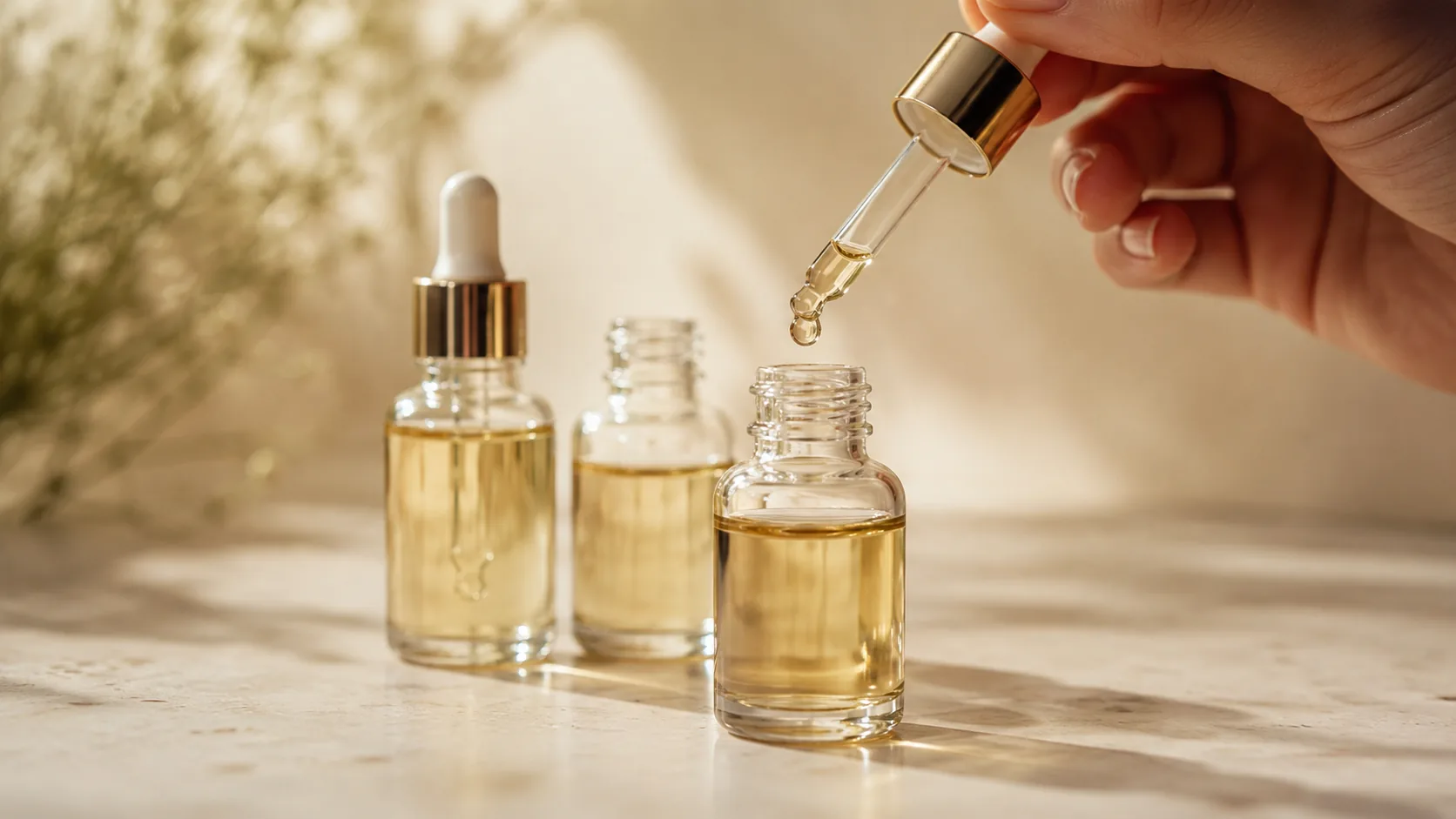
Why low porosity hair needs light oils
Low porosity hair has a tight, flat cuticle that resists absorption but holds moisture well once it gets in. That one fact decides which oils are worth using. A heavy oil meets a closed surface, finds nowhere to go, and pools on top of the strand. It looks like product, but it is a coating, not a treatment.
It helps to remember that low porosity hair is not dry hair that needs more product. It is hair that struggles to absorb what it already has, so the fix is better absorption, not heavier layers. With oils, that means lighter texture is the whole game. Thin, fast-absorbing oils slip past the cuticle. Thick, heavy ones build up and leave hair greasy and flat.
If an oil leaves your hair greasy, weighed down, or filmy, it is too heavy for you. The right oil for low porosity hair almost disappears: a few drops, smoothed in, gone.
What makes an oil light
Whether an oil absorbs or just coats comes down to its molecules. Oils with small, simple, straight-chain molecules can slip into the hair shaft, while oils with big, bulky molecules sit on the outside. Coconut oil is the textbook example of a small-molecule oil that can penetrate, which is why you see it praised nearly everywhere.
But for low porosity hair the day-to-day problem is not penetration, it is buildup on a cuticle that is already closed. Coconut oil is heavy enough that, in a real routine, it tends to pool and film rather than help. So the practical rule for low porosity hair is simpler than the chemistry: choose oils that are light in texture, and use them in small amounts. Texture and weight, not reputation, are what to shop for.
The best light oils for low porosity hair
These are the oils thin enough to absorb instead of just coating. Grapeseed and argan are the go-to picks, with jojoba and sweet almond as fellow light oils worth keeping on the shelf.
- Jojoba. Technically a liquid wax that closely mimics the scalp's own sebum, so it spreads thin and absorbs without a heavy, greasy film. A good everyday choice.
- Grapeseed. One of the lightest carrier oils there is. It absorbs quickly and suits fine, low porosity hair especially well.
- Sweet almond. Light and slippery, it glides through strands without weighing hair down or leaving a film.
- Argan, used sparingly. Lightweight and excellent for shine and frizz, but it works mostly at and just under the cuticle as a smoothing layer rather than soaking deep in. A few drops, not handfuls.
- Sunflower. A thin, widely available oil that sits on the lighter end and works as a light finishing oil.
Heavy oils to avoid, and why
The heavy oils and butters are not bad oils. They are simply the wrong tool for a closed cuticle, because their job is to coat and seal, which is the last thing low porosity hair needs.
- Coconut oil. Famous as a penetrating oil in lab studies, but in real low porosity routines it tends to pool on the surface and build up, especially on finer or lower-porosity hair. Buildup, not penetration, is the limiting factor here.
- Castor oil. Thick and heavy. It is a sealing oil for high porosity hair, not an absorbing oil for low porosity.
- Heavy butters (shea, cocoa) in large amounts. Rich and occlusive, they mostly pool on top.
The through-line is buildup. Low porosity hair films over the fastest because the cuticle already lies flat, so heavy oils make the problem worse and you end up clarifying more often. If your routine has drifted heavy, the product buildup guide covers how to reset it.
How to apply oil to low porosity hair
Technique matters more than the exact oil you pick. Use tiny amounts on warm, damp hair, and add gentle heat so the cuticle opens enough to let the oil in.
- Warmth opens the door. Warm (not hot) water, a few minutes of steam, or a thermal heat cap during conditioning helps. Warming the oil between your palms first helps too.
- Apply to warm, damp hair right after a rinse, while the cuticle is most receptive. Oil on cold, dry hair tends to sit on top.
- Small amounts only. A few drops, emulsified in your palms, smoothed through the mid-lengths and ends. More oil backfires here: more film, more washing.
- Clarify regularly so light oils keep absorbing instead of layering into buildup.
For the full wash-day routine, see the low porosity hair guide, and for homemade options the DIY natural hair recipes are sorted by porosity. Oils are one piece of the kit; the full picture is in the best products for low porosity hair.
Oils that work
Below are the oils and tools that suit low porosity hair, described by type so you can match the role to whatever is available. Every pick here is a light oil or something that helps a light oil absorb.
Heads up: the links below are affiliate links. If you buy through them we may earn a small commission at no extra cost to you, and we pick by fit, not by commission.
Frequently asked questions
Is jojoba oil good for low porosity hair?
Yes. Jojoba is a light, wax-ester oil whose structure closely mimics the scalp's natural sebum, so it spreads thin and absorbs without leaving the heavy, greasy film that weighs low porosity hair down. Use a few drops on warm, damp hair.
Is coconut oil good for low porosity hair?
Usually no. Coconut oil is heavy and tends to pool on the surface of low porosity hair, building up fast on an already tight, flat cuticle. It is better suited to high porosity hair as a sealing oil. Reach for lighter oils like jojoba, grapeseed, or argan instead.
Is argan oil good for low porosity hair?
Yes, in small amounts. Argan is lightweight and great for shine and frizz, but it works mostly at and just under the cuticle as a smoothing layer rather than penetrating deeply, so a few drops on damp hair is plenty. Too much will sit on top.
What is the best oil for low porosity hair?
There is no single winner, but grapeseed, jojoba, sweet almond, and argan used sparingly are the best fits because they are light enough to absorb instead of coating. The application matters as much as the oil: tiny amounts, warm, damp hair, gentle heat.
Why do oils sit on top of my low porosity hair?
Low porosity hair has a tight, flat cuticle that resists absorption, so heavy oils have nowhere to go and pool on the surface. Lighter oils, applied in small amounts to warm, damp hair, slip in more easily. If oil still sits, you are using too much or your hair is too cold and dry when you apply it.
Should I use castor oil on low porosity hair?
Not as a primary oil. Castor is thick and heavy, which makes it a sealing oil for high porosity hair, not an absorbing oil for low porosity. On a tight cuticle it mostly builds up and leaves a greasy coating.