
Low porosity hair: signs, routine, and products
Low porosity hair has a tight cuticle that resists moisture getting in. Once it is in, it holds. The whole game is helping product get past the surface.
Signs of low porosity hair
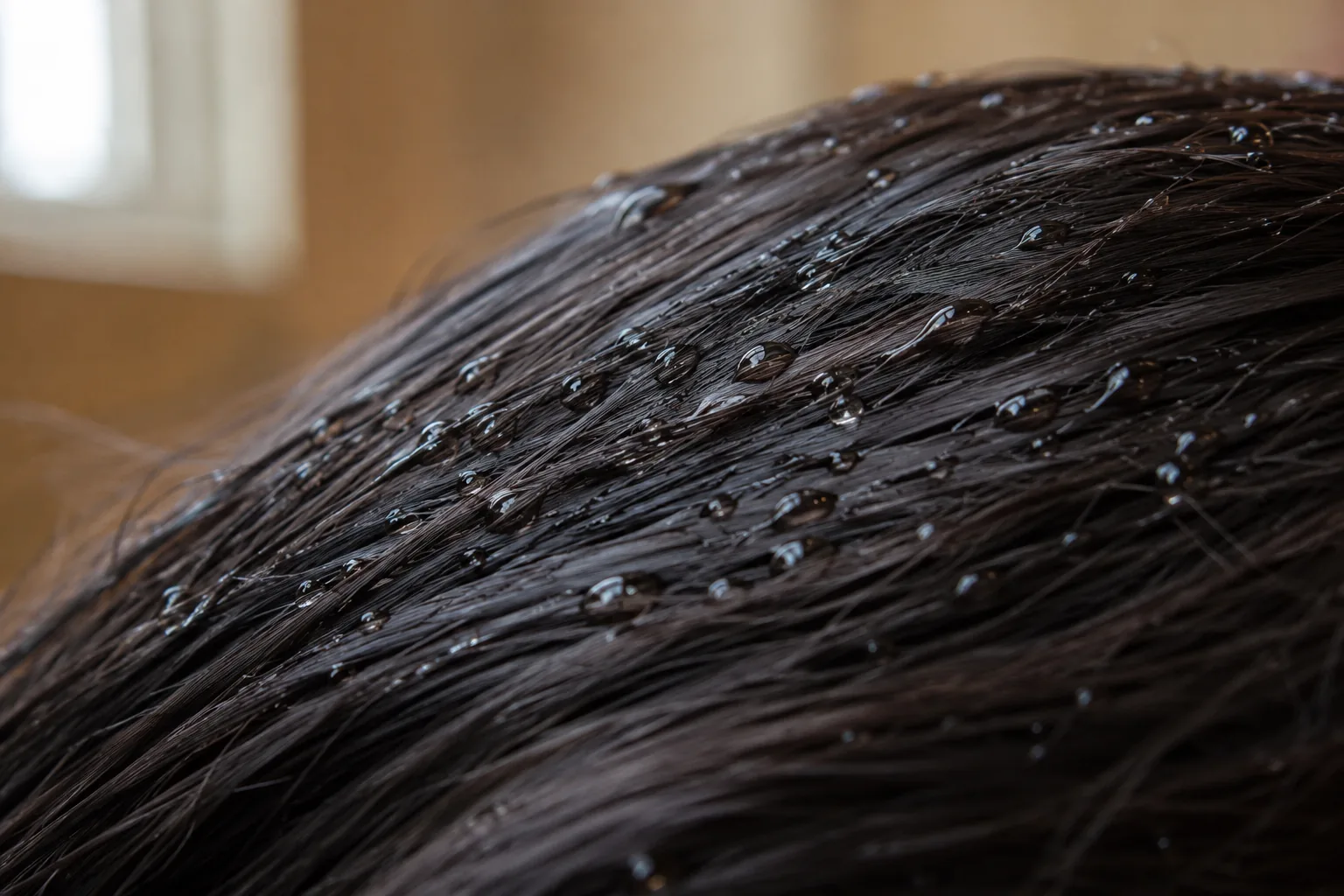
Porosity describes how easily your hair takes in and holds on to moisture, and it comes down to the cuticle, the outer layer of overlapping scales on each strand. With low porosity hair, those scales lie flat and tight against the strand. That tight surface is slow to let water and product in, but once moisture does make it inside, low porosity hair holds on to it very well. The challenge is almost never retention. It is getting things past the door in the first place.
You probably have low porosity hair if a few of these feel familiar:
- Products tend to sit on top of your hair and can feel greasy or heavy rather than absorbed.
- Your hair takes a long time to air-dry, because the flat cuticle is slow to release water too.
- Water beads up on the surface when you wet your hair instead of soaking straight in.
- Your hair is prone to product buildup, and a film seems to collect over time.
- Your hair can feel "coated" rather than genuinely moisturized, even right after a wash.
Low porosity hair is not dry hair that needs more product. It is hair that struggles to absorb the product it already has. The fix is better absorption, not heavier layers.
Why products sit on top
When the cuticle is closed flat, there is very little room for ingredients to move into the strand. Heavy creams, thick butters, and rich oils have nowhere to go, so they pool on the surface and stay there. That is why low porosity hair so often feels slick or greasy after styling while still feeling dry underneath. The product never actually penetrated. It is a coating, not a treatment.
This is also why piling on more product backfires. Each layer adds to the film on top, the hair feels heavier and dirtier, and you end up needing to wash more often. The goal is to coax the cuticle open just enough for lighter, thinner products to slip inside.
The low porosity routine
A routine that works with low porosity hair is built around one idea: open the cuticle gently, then give it something light enough to get through. A few habits do most of the work.
- Use gentle heat to open the cuticle. Warm (not hot) water, a few minutes of steam, or a thermal or heat cap during a deep conditioning session helps lift those flat scales so product can reach inside.
- Apply products to damp, warm hair. Right after a warm rinse, while the cuticle is most receptive, is the best window. Products applied to cold, dry hair tend to sit on top.
- Choose lightweight, water-based products. Reach for milks, foams, and light liquids over heavy butters. Thinner textures absorb far more readily.
- Use humectants to draw moisture in. Ingredients like glycerin, honey, and aloe pull water into the strand rather than coating it.
- Clarify regularly. Product buildup is the main enemy for low porosity hair, because the surface already resists penetration. A clarifying wash every few weeks resets the slate.
- Go easy on protein. Low porosity hair is often protein-sensitive. Too much protein can leave it stiff, hard, and straw-like, so lead with moisture and use protein sparingly.
If you only change one thing, change the temperature. Applying a lightweight leave-in to warm, damp hair instead of cool, dry hair is the biggest upgrade most low porosity routines can make.
Ingredients to look for
Read the label from the top down. The first ingredient should usually be water, and the rest of the list should stay light. These are the ingredients that tend to work well for low porosity hair:
- Water as the first ingredient, so the base is hydrating rather than heavy.
- Humectants: glycerin, honey, and aloe vera, which draw and hold moisture in the strand.
- Hyaluronic acid, a lightweight hydrator that attracts water.
- Lightweight oils such as argan, grapeseed, and sunflower, which are thin enough to absorb instead of just coating.
Many of these humectants work just as well in homemade treatments. For lightweight masks and rinses you can mix at home, see our DIY natural hair recipes.
Ingredients to avoid
The flip side matters just as much. A few common ingredients tend to sit on the surface of low porosity hair and cause the buildup you are trying to avoid:
- Heavy butters like shea and cocoa in large amounts. A little can be fine, but rich butters mostly pool on top.
- Non-water-soluble silicones, which build up over time and form a barrier that blocks moisture from getting in.
- Heavy protein, used frequently. Because low porosity hair is often protein-sensitive, too much leaves it stiff and brittle-feeling.
Products that work
Nothing here is a specific brand. These are the product types that tend to suit low porosity hair, so you can match the description to whatever is on the shelf or in your cart.
Heads up: the links below are affiliate links. If you buy through them we may earn a small commission at no extra cost to you, and we pick by fit, not by commission.
Common questions
How do I know if I have low porosity hair?
The clearest signs are products sitting on top and feeling greasy, hair taking a long time to air-dry, and water beading on the surface. The float test (a clean strand floats) and the quiz confirm it.
Is protein bad for low porosity hair?
Not bad, but easy to overdo. Low porosity hair is often protein-sensitive, so frequent protein can leave it stiff and straw-like. Use light protein occasionally, and lead with moisture.
Why does my low porosity hair feel greasy?
Because product is sitting on the surface instead of absorbing. Switch to lightweight, water-based products, apply to warm damp hair, and clarify regularly to clear buildup.
How do I fix low porosity hair?
Fixing low porosity hair is about getting moisture past the tight cuticle, not adding more product. Use gentle heat to open the cuticle, apply lightweight, water-based products to warm damp hair, and clarify regularly to clear the buildup that blocks absorption. Go easy on protein, since low porosity hair is often protein-sensitive.