
Leave-in conditioner for high porosity hair: how to choose one and make it last
High porosity hair soaks up a leave-in in seconds and feels dry again by lunchtime. The fix is rarely a stronger product. It is the right kind of leave-in, put on at the right moment, with something on top to hold it in.
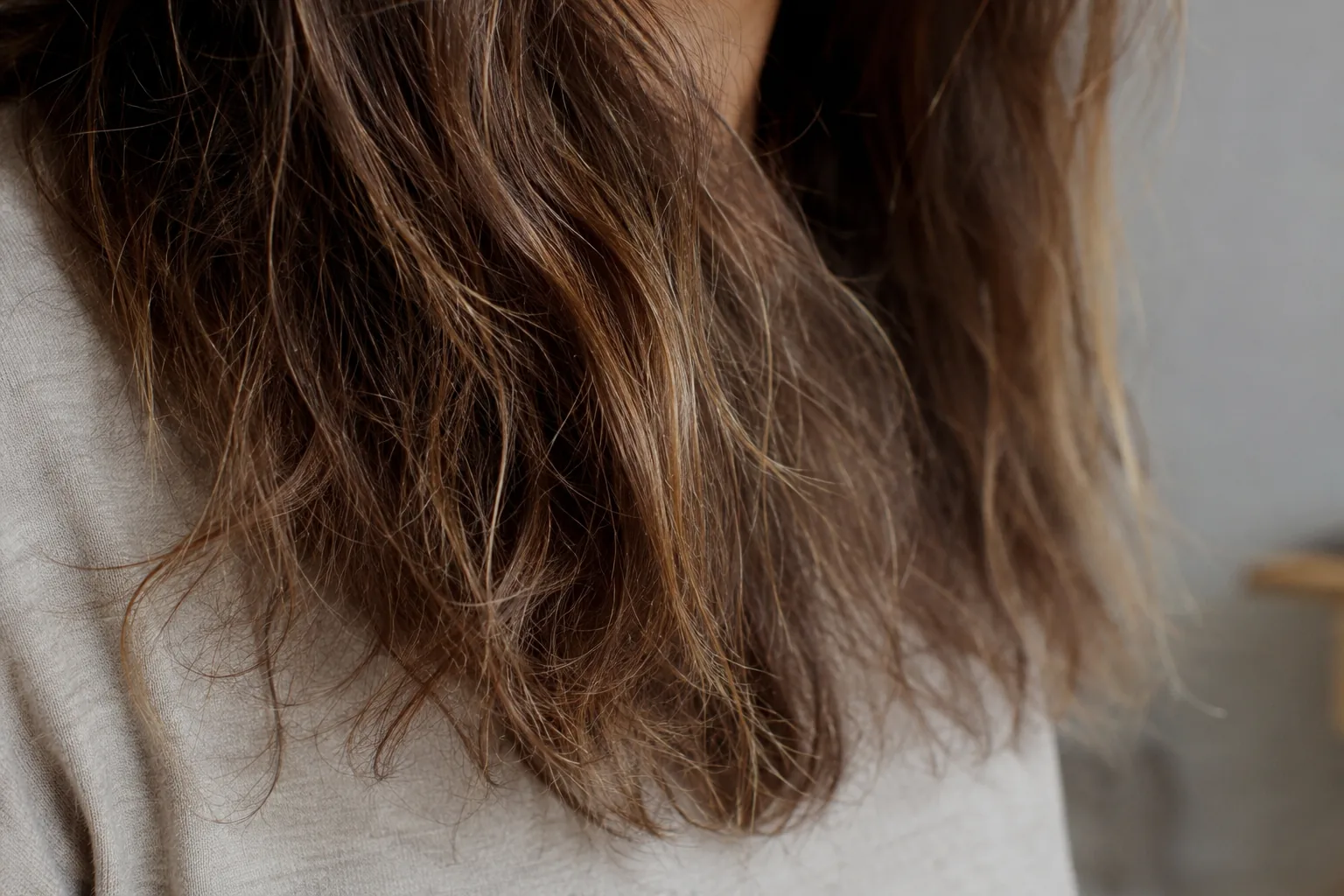
Why a leave-in matters for high porosity hair
On high porosity hair the cuticle, the outer layer of overlapping scales, sits raised with gaps along the strand. Water rushes in through those openings, which is why this hair gets wet fast and drinks up product. It also rushes back out, which is why it dries fast, frizzes, and feels rough again a few hours after styling. If that sounds familiar, the high porosity hair guide explains the full picture.
A rinse-out conditioner helps while you are in the shower, but most of it goes down the drain. A leave-in is the product that stays with your hair all day. It does three jobs at once:
- It adds water and softness at the moment the hair is most able to hold it, straight after washing.
- It gives slip, so you can detangle without snapping strands that are already weaker than average.
- It lays down a light, flexible film that smooths the raised edges of the cuticle, so the hair feels less rough and catches less.
What a leave-in cannot do on its own is keep that water in for long. On low porosity hair a leave-in can be the last step. On high porosity hair it is the first layer of a stack, and the layers on top matter just as much.
Think of the leave-in as the water you are trying to keep, not the thing that keeps it. Choose one that gives real moisture and slip, then always seal it with a cream or oil.
What to look for on the label
Ingredient lists run from most to least, so the first five or six lines tell you most of what you need. For high porosity hair, these are the signs of a leave-in worth trying:
- Water (aqua) first. A leave-in is the liquid step. If an oil or butter is listed first, it is really a cream or a styler, which is fine as a second layer but not as your moisture source.
- A conditioning agent near the top. Names like behentrimonium methosulfate, behentrimonium chloride, or cetrimonium chloride give slip and smoothness. They help the cuticle lie flatter and make detangling easier.1
- Fatty alcohols. Cetyl, cetearyl, and stearyl alcohol are not drying. They are waxy, softening ingredients that give a leave-in body and help it cling to the strand.2
- Rich emollients. Shea butter, mango butter, olive oil, and similar ingredients cushion the hair and slow water loss. Fine hair may want them further down the list; thick or coily hair can take them near the top.
- A little hydrolyzed protein. Hydrolyzed keratin, wheat, rice, or silk protein, or amino acids, add strength; small hydrolyzed proteins such as keratin can get into hair and reduce breakage, especially in damaged hair.3 In a leave-in the amount is small, which suits daily use. You can learn more in our protein vs moisture guide.
- Panthenol and aloe. Both hold water and add softness without much weight.
Ingredients to be careful with
None of these is banned. They just tend to work against high porosity hair when they are high on the list or used without a seal.
- Drying alcohols near the top. Alcohol denat, SD alcohol, and isopropyl alcohol evaporate quickly, and many people find they leave thirsty hair drier. Low on a long list, they are usually there in tiny amounts and matter less.
- Lots of glycerin in very humid or very dry weather. Glycerin pulls water toward itself. Many people find that in damp weather it leads to frizz on open, porous hair, and a common tip is that in very dry air it may pull water out of the strand. Sealing over it is a simple precaution in both cases.
- Heavy, non-soluble silicones every day. Some silicones smooth porous hair nicely, but heavier ones build up when you co-wash or use gentle cleansers.4 If you use them, plan a clarifying wash every few weeks.
- Strong protein if you are already protein-heavy. If your deep conditioner and styler both contain protein, a protein-free leave-in keeps the total in check.
How to use it in your routine
How you apply a leave-in matters as much as which one you buy. This order works for most high porosity hair:
- Apply it to soaking-wet hair. Do it in the shower or right after, before towel drying. The extra water is what you are trapping, and porous hair loses it within minutes.
- Work in sections. Smooth the leave-in from mid-lengths to ends first, where the hair is oldest and most porous, then go up toward the roots with whatever is left on your hands.
- Detangle while it is in. Use fingers or a wide-tooth comb, starting at the ends. The slip protects the strand while you work.
- Seal it. Follow with a cream, an oil, or both. This is the LOC method (liquid, oil, cream) or the LCO method (liquid, cream, oil). Many people with very porous hair prefer ending on an oil because it sits on the outside and they find it slows water loss longest.5 The best products for high porosity hair guide covers the other layers.
- Refresh midweek. Mist the hair with water, smooth a small amount of leave-in over the driest areas, and seal the ends again.
If your hair still feels dry an hour after styling, change the method before you change the product. Apply to wetter hair, use a little more, and add a heavier seal on top. That fixes most leave-ins that seem to stop working.
Matching the leave-in to your hair
High porosity is about the cuticle, not about thickness or curl pattern, so two people with very porous hair can need quite different leave-ins. Texture decides how much weight your hair can carry.
- Fine or thin porous hair. Look for sprays and milks, and keep butters and heavy oils lower on the list. Seal with a few drops of an oil that feels light, such as argan or jojoba so the hair stays soft without falling flat.
- Medium-thick wavy or curly hair. A milk or a light cream usually works, followed by a curl cream or gel. If curls feel dry by day two, move up to a richer cream.
- Thick, coarse, or coily hair. Creamy leave-ins with shea butter near the top tend to last longest. Many people here layer a spray for slip, then a cream, then a heavier oil such as castor.
- Color-treated or bleached lengths. These are usually the most porous part of the head and benefit most from a leave-in with a little protein.6 You can use a richer product on the ends than on the roots.
Climate matters too. In humid summers, many people find a leave-in with less glycerin and a firmer seal helps control frizz. In dry winters, a richer cream and more frequent refreshing usually make the biggest difference.
Common mistakes
- Waiting until the hair is half dry. By then a high porosity strand has already lost much of the water you wanted to keep.
- Using a spray alone on thick or coily hair. Light sprays are lovely for refreshing, but on their own they rarely hold up for very porous hair. Pair them with a cream.
- Skipping the seal. A leave-in without a cream or oil on top is the most common reason this hair feels dry by midday.
- Piling on more and more. If your hair starts to look dull, coated, or weighed down, it may be buildup, not dryness. A clarifying wash usually fixes it.
- Doubling up on protein without noticing. Check the labels on your leave-in, styler, and mask together. If hair feels stiff or straw-like, the hair elasticity test will give you a rough read on whether to back off protein for a while.
Keep in mind that porosity is not fixed for life. Damage tends to make it worse, and gentle care helps new growth come in healthier. Our guide on whether hair porosity can change explains what you can and cannot shift.
Leave-in conditioners that work
These are well-known leave-ins that suit high porosity hair, from light sprays to rich creams. Each has a cheaper alternative that does a similar job. Thicker, coarser hair usually likes the creams; finer porous hair often prefers the milks and sprays.
Heads up: the links below are affiliate links. If you buy through them we may earn a small commission at no extra cost to you, and we pick by fit, not by commission.
Shopping by product type? See our high porosity guides to the best protein treatment and deep conditioner.
Sources
The research behind this guide. Last reviewed 19 October 2026.
- Gavazzoni Dias MF. Hair cosmetics: an overview. International Journal of Trichology. 2015;7(1):2-15. PubMed
- Draelos ZD. Essentials of hair care often neglected: hair cleansing. International Journal of Trichology. 2010;2(1):24-29. PubMed
- Malinauskyte E, Shrestha R, Cornwell PA, et al. Penetration of different molecular weight hydrolysed keratins into hair fibres and their effects on the physical properties of textured hair. International Journal of Cosmetic Science. 2021;43(1):26-37. PubMed
- Carvalho RM, Melo DF, Kelati A, et al. With or without silicones? A comprehensive review of their role in hair care. Skin Appendage Disorders. 2025;11(6):586-589. PubMed
- Keis K, Huemmer CL, Kamath YK. Effect of oil films on moisture vapor absorption on human hair. Journal of Cosmetic Science. 2007;58(2):135-145. PubMed
- Hessefort Y, Holland BT, Cloud RW. True porosity measurement of hair: a new way to study hair damage mechanisms. Journal of Cosmetic Science. 2008;59(4):303-315. PubMed
Frequently asked questions
What kind of leave-in conditioner is best for high porosity hair?
A creamy, water-based leave-in with some slip, rich emollients like shea butter, and ideally a little hydrolyzed protein. Water should be the first ingredient. Then seal it with a cream or oil so the moisture stays in.
Should I put leave-in conditioner on wet or damp hair?
On wet hair, straight out of the shower. High porosity hair loses water fast, so applying the leave-in while the strands are still soaked traps far more moisture than applying it to towel-dried hair.
Can I use a leave-in conditioner every day on high porosity hair?
Yes. High porosity hair often needs a midweek refresh. Mist the hair with water, smooth on a small amount of leave-in, and seal the ends again. Just watch for buildup and clarify every few weeks if hair starts to feel coated.
Is a leave-in with protein good for high porosity hair?
Usually, yes. Small hydrolyzed proteins can get into hair and reduce breakage, especially in damaged hair. If your hair starts to feel stiff, straw-like, or snaps easily, many people find it helps to switch to a protein-free leave-in for a while and lean on moisture.
Do I still need an oil if I use a leave-in conditioner?
Most people with high porosity hair do. The leave-in supplies water and softness, but a cream or oil on top is what slows that water from escaping. Without a seal, the leave-in often feels great for an hour and then fades.