
Protein treatment for high porosity hair: how to use it, and how often
Many people with high porosity hair find it benefits from regular protein. The catch is that it is easy to overdo. Here is how to choose the right strength, use it safely, and read your hair so you know when to stop.
Why protein helps high porosity hair
Hair is made mostly of a protein called keratin. On high porosity hair the cuticle, the protective outer layer, is raised and worn, often from coloring, bleaching, heat, or years of everyday wear.1, 2 There are gaps and weak spots along the strand. That is why this hair takes in water fast, loses it just as fast, and stretches or breaks more easily than it should.
A protein treatment uses hydrolyzed proteins, which are proteins broken into smaller pieces that can cling to the hair. The smallest ones, such as hydrolyzed keratin, can get into the hair and reduce breakage, especially in damaged hair, while larger proteins mostly stay on the surface.3, 4 The result, when it works, is hair that feels stronger, holds its shape better, frizzes less, and keeps moisture in a little longer. The effect is temporary. It washes out over time, which is why protein is something you return to, not a one-off fix.
This is very different from low porosity hair, where the cuticle is tight and many people find heavy protein leaves hair stiff. If you are not sure which group you are in, the porosity quiz takes about a minute, and the high porosity hair guide covers the full routine.
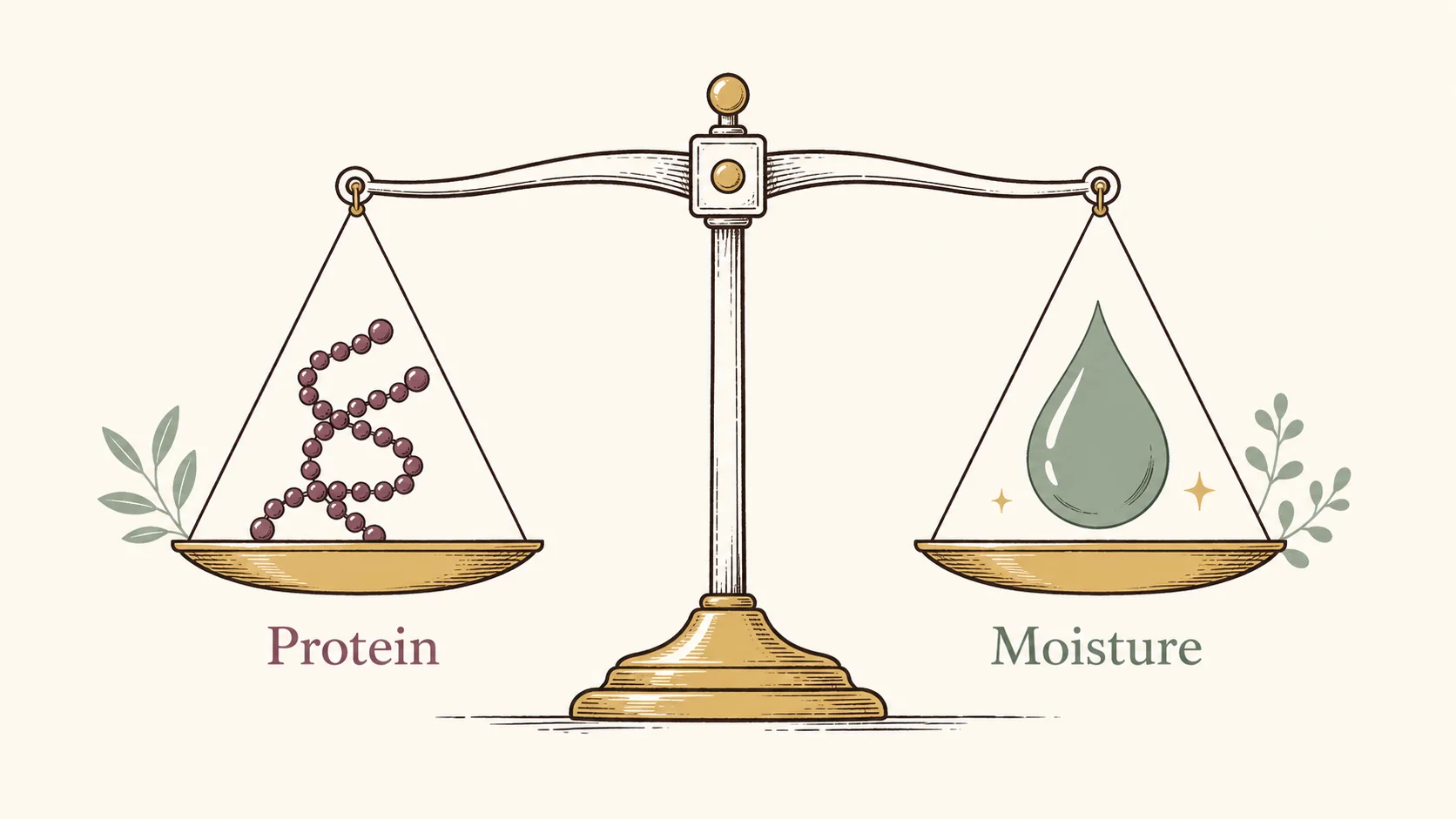
Protein strengthens, moisture softens, and high porosity hair needs both. A protein treatment is one step in a routine, and it should almost always be followed by moisture.
Light vs strong protein treatments
"Protein treatment" covers a wide range of products. Choosing the right strength matters more than choosing the right brand.
- Light protein (leave-ins and conditioners). Small amounts of hydrolyzed protein or amino acids in everyday products. Gentle enough for regular use and a good starting point.
- Moderate protein (masks and reconstructors). Rinse-out treatments with more protein, left on for a few minutes up to half an hour. Most high porosity hair does well with one of these every week or two, depending on how it responds.
- Strong protein (intensive reconstructors). Treatments that harden as they dry and are designed for badly damaged, breaking hair. Powerful, and the easiest to overdo. These are occasional treatments, often spaced weeks apart, and they need a moisturizing step afterward.
Bond builders are a related but different category. They are marketed to repair bonds inside the hair rather than coating it with protein; independent lab work so far shows a smoother surface but limited direct evidence of bonds being rebuilt.5 Many people with heavily bleached hair still find them helpful, and some use one alongside a light protein routine. The best products for high porosity hair guide covers that option.
What to look for on the label
- "Hydrolyzed" in the name. Hydrolyzed keratin, wheat protein, rice protein, silk, collagen, or quinoa are all common. The word "hydrolyzed" means the protein is broken into smaller pieces. The smallest can get into the hair; larger ones cling to the surface.
- Amino acids. These are the smallest building blocks of protein and give a lighter effect. Good for regular use.
- How high the protein sits on the list. Near the top suggests a stronger treatment. Near the end suggests a lighter one.
- Moisturizing partners. Treatments that also contain conditioning agents, fatty alcohols, oils, or butters tend to leave hair softer and are easier to use well.
Be careful with very strong treatments that list few conditioning ingredients and come with firm instructions about timing and follow-up. They are not bad products. They just need to be used exactly as directed.
How to do a protein treatment safely
- Read the label first, and follow it. Timing, how much to use, whether to use heat, and what to follow with all vary a lot between products. The instructions on the package beat any general advice, including ours.
- Strand test a new product. Try it on a small, hidden section before your whole head, especially with strong reconstructors or if your hair is very fragile.
- Start on clean hair. Shampoo first so the protein reaches the hair rather than a layer of old product.
- Focus on the damaged areas. The mid-lengths and ends are usually the most porous. Roots rarely need much.
- Time it. Leaving a protein treatment on longer than directed does not make it work better and can leave hair stiff.
- Rinse well, then moisturize. Follow with a moisturizing conditioner or deep conditioner, then your usual leave-in and seal.
If your scalp is irritated or broken, or you have a known allergy to an ingredient such as wheat, skip that product. And if hair is breaking badly, it is worth getting a professional opinion rather than reaching for stronger and stronger treatments.
How often, and the signs of overload
As a starting point, many people with high porosity hair use a light or moderate protein treatment every one to two weeks, and a strong reconstructor only every four to six weeks or less often. Treat those as places to start, not rules. Your hair will tell you what it needs.
The simplest rough home read is the hair elasticity test, a common rule of thumb among stylists rather than a lab test. Gently stretch a clean, wet strand:
- It stretches a long way and does not spring back, or feels mushy: it may need protein.
- It snaps almost straight away and feels dry and rough: it may have enough protein and need moisture.
- It stretches a little and returns: you are likely in balance.
Protein overload is a rule of thumb rather than a lab finding: many people find hair that has had too much protein feels hard, straw-like, crunchy, or brittle, tangles more, and breaks off in small pieces. It is easy to fix. Stop protein for a while, use a moisture-focused deep conditioner, clarify if products have built up, and retest after a few washes. The protein vs moisture balance guide goes deeper into reading the signs.
A sample protein wash day
Here is how a moderate protein treatment usually fits into a wash day for high porosity hair. Adjust the timings to whatever your product's label says.
- Cleanse. Use a gentle shampoo, or a clarifying one if it has been a few weeks and your hair feels coated.
- Protein treatment. Squeeze out excess water, apply the treatment in sections from mid-lengths to ends, and leave it on for the time on the label.
- Rinse thoroughly. Make sure no treatment is left behind, especially with products that harden as they dry.
- Moisture. Follow with a moisturizing conditioner or a short deep conditioning session. This step is what keeps the hair soft.
- Leave-in and seal. Apply a leave-in to wet hair, then a cream or oil. On a protein day, a protein-free leave-in keeps the total in check.
Then watch your hair over the next few days. If it feels stronger, holds its curl better, and still feels soft, that strength and frequency suit you. If it feels stiff or rough, go lighter or less often next time. If nothing seems to change and wet hair still stretches a long way, you may need a slightly stronger product. Keep notes for a few weeks; patterns show up quickly.
Common mistakes
- Stacking protein without noticing. A protein mask, a protein leave-in, and a protein styler in the same week can add up fast. Check every label.
- Skipping moisture afterward. This is the most common reason a treatment leaves hair feeling rough.
- Using a strong reconstructor as a weekly mask. Save the strongest treatments for real damage, spaced well apart.
- Expecting a permanent fix. Protein patches damage for a while. Gentler habits, like less heat and careful detangling, are what help new growth stay healthier. Our guide on whether hair porosity can change explains why.
Protein treatments that work
These well-known treatments span the range from light to strong. Each has a cheaper alternative. If you are new to protein, start at the lighter end and work up only if your hair asks for it.
Heads up: the links below are affiliate links. If you buy through them we may earn a small commission at no extra cost to you, and we pick by fit, not by commission.
Shopping by product type? See our high porosity guides to the best leave-in conditioner and deep conditioner.
Sources
The research behind this guide. Last reviewed 19 October 2026.
- Hessefort Y, Holland BT, Cloud RW. True porosity measurement of hair: a new way to study hair damage mechanisms. Journal of Cosmetic Science. 2008;59(4):303-315. PubMed
- Lee Y, Kim YD, Hyun HJ, et al. Hair shaft damage from heat and drying time of hair dryer. Annals of Dermatology. 2011;23(4):455-462. PubMed
- Malinauskyte E, Shrestha R, Cornwell PA, et al. Penetration of different molecular weight hydrolysed keratins into hair fibres and their effects on the physical properties of textured hair. International Journal of Cosmetic Science. 2021;43(1):26-37. PubMed
- Gavazzoni Dias MF. Hair cosmetics: an overview. International Journal of Trichology. 2015;7(1):2-15. PubMed
- Di Foggia M, Boga C, Micheletti G, et al. Structural investigation on damaged hair keratin treated with α,β-unsaturated Michael acceptors used as repairing agents. International Journal of Biological Macromolecules. 2021;167:620-632. PubMed
Frequently asked questions
How often should I do a protein treatment on high porosity hair?
It depends on the strength. A light protein mask can go into your routine every one to two weeks. A strong reconstructor is usually spaced every four to six weeks or longer. Always follow the directions on the label, and let the stretch test guide you.
How do I know if my high porosity hair needs protein?
Wet hair that stretches a long way without springing back, feels mushy or gummy, and loses its curl pattern is, as a common rule of thumb, asking for protein. Hair that feels stiff, dry, and snaps quickly may need moisture instead. It is a rough home read, not a lab test.
What are the signs of protein overload?
As a rule of thumb, many people find hair that has had too much protein feels hard, straw-like, rough, or crunchy, tangles more than usual, and snaps with very little stretch. Pause protein, deep condition with a moisture-focused mask, and clarify if products have built up.
Should I deep condition after a protein treatment?
Yes, especially after a strong treatment. Protein adds strength but can leave hair feeling firm. A moisturizing conditioner or deep conditioner afterward brings back softness and flexibility.
Is a bond builder the same as a protein treatment?
No. Protein treatments use hydrolyzed protein; the smallest pieces can get into damaged hair and reduce breakage, while larger ones coat the surface. Bond builders are marketed to repair bonds inside the hair, though independent evidence that they rebuild bonds is still limited. Many people with damaged high porosity hair find one or both helpful.