
The best shampoo for low porosity hair
Anyone can get buildup, but on low porosity hair it tends to show as products sitting on top, so the shampoo you choose decides whether the rest of your routine can work. Here is how to pick one that cleans without stripping, when to clarify, and which bottles fit the job.
Why shampoo matters so much for low porosity hair
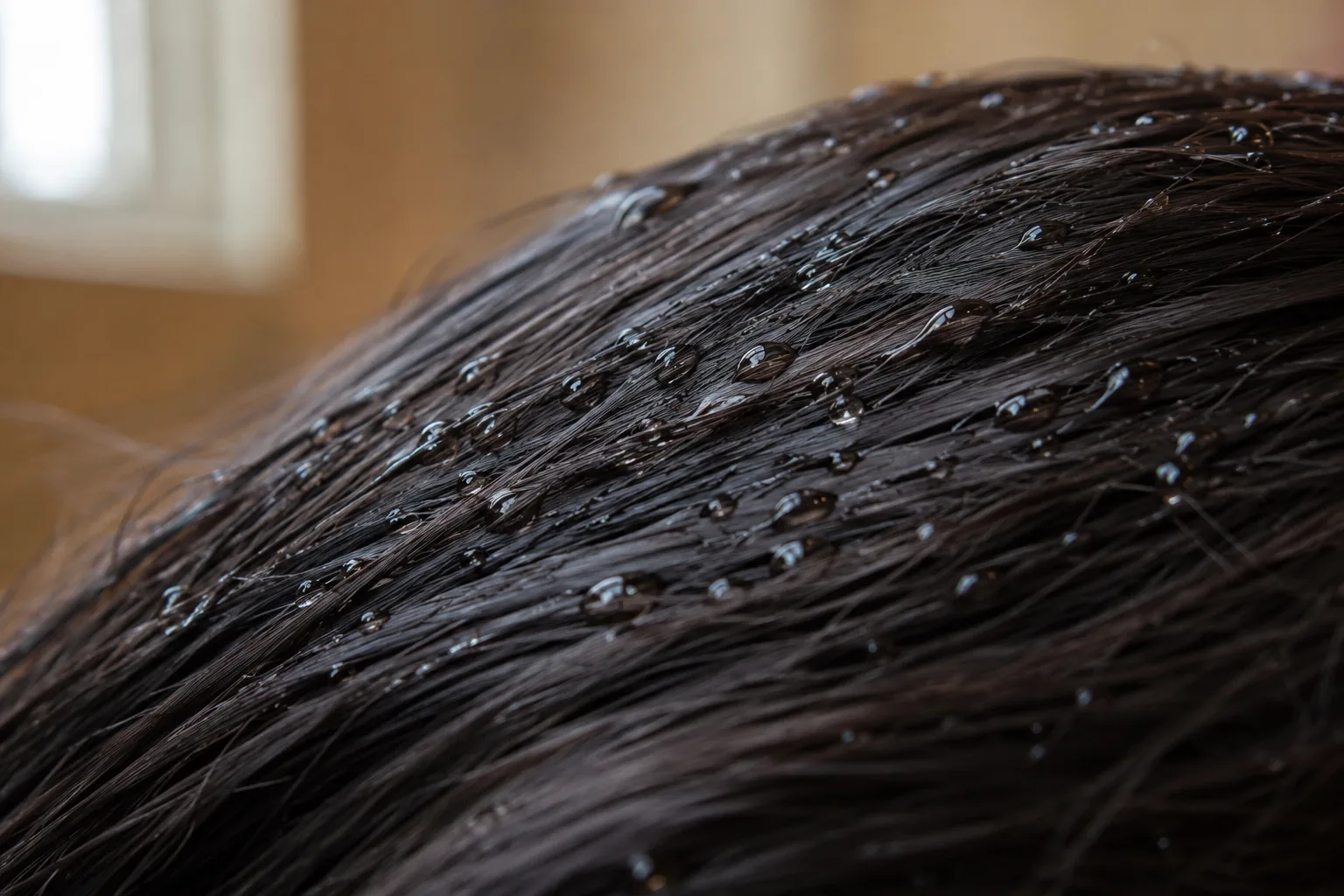
Low porosity hair has a tight, flat cuticle. The overlapping scales on the outside of each strand lie down smooth and closed, so water and product are slow to get in. That is usually described as a moisture problem, but on wash day it is just as much a cleaning problem. Whatever does not soak in stays on the surface, and many people with low porosity hair notice residue sitting on top: conditioner film, styling polymers, oils, and the minerals in hard water.
That residue is what turns a good routine bad. Once the strand is coated, your leave-in and deep conditioner have an even harder time reaching the hair underneath, so you reach for more product, which leaves more residue. Shampoo is the step that breaks the loop. A good one leaves the cuticle clean and ready to take in moisture. A poor fit either leaves a film of its own or strips so hard that hair feels rough and squeaky.
So you are not looking for the most moisturizing shampoo on the shelf. You are looking for one that rinses clean and leaves nothing behind, plus a stronger option for the days when buildup has already set in. If you are not yet sure your hair is low porosity, the porosity quiz and the water test are good places to start.
The best shampoo for low porosity hair is the one that leaves nothing on the strand. Clean hair absorbs. Coated hair does not.
Everyday, clarifying and chelating shampoos
Most low porosity routines work best with two, sometimes three, kinds of shampoo, each doing a different job.
- Everyday shampoo. A gentle, usually sulfate-free cleanser for most wash days. It should clean the scalp properly and rinse out without leaving a coating. A thin, clear or lightly pearly formula is usually a better sign than a thick, creamy one loaded with oils.
- Clarifying shampoo. A stronger cleanser for clearing product buildup, often built on sulfates.1 Many people with low porosity hair notice products sitting on top, and this hair tends to tolerate clarifying well. Every couple of weeks is a sensible starting point, and always follow it with a deep conditioner.
- Chelating shampoo. A shampoo that binds and removes minerals such as calcium and magnesium from hard water, along with chlorine and metals from pool water.2, 3 If your hair feels dry and dull no matter what you do, and your kettle or shower head shows white scale, minerals may be the real problem. Some clarifying shampoos chelate too, and the ingredient list will tell you.
If you live with hard water, a chelating shampoo once or twice a month can do more for low porosity hair than any new conditioner. Mineral film looks and feels much like product buildup, and an ordinary gentle shampoo does not remove it well.
What to look for on the label
Turn the bottle over. The front tells you how the brand wants you to feel. The ingredient list tells you how the shampoo will behave on a closed cuticle. These are good signs:
- Gentle surfactants for everyday washing, such as cocamidopropyl betaine, sodium cocoyl isethionate, decyl or coco glucoside, and olefin sulfonates. They clean well without the harshest stripping.4
- Chelating agents if you have hard water or swim: disodium or tetrasodium EDTA, phytic acid, or sodium gluconate.
- Humectants such as glycerin, aloe, or honey in small amounts, which help the strand hold on to water after rinsing.
- A simple, thin formula. Shampoo is on your hair for a minute or two. It does not need to be rich.
And the ones to be careful with in an everyday shampoo:
- Heavy oils and butters high on the list (shea, cocoa, castor). In a shampoo they are there to leave something behind, and on low porosity hair that something becomes film.
- Non-water-soluble silicones such as dimethicone and amodimethicone. They smooth hair but tend to build up, and a gentle shampoo will not remove them. Water-soluble types with "PEG" in the name rinse away far more easily.5
- Two-in-one and heavily conditioning shampoos. Some people love them, but if your hair starts to feel coated or stiff a few washes in, the conditioning ingredients are the likely cause.
- Strong sulfates every single wash. Sodium lauryl sulfate (SLS) is the harsh one: excellent for clarifying, but it can leave hair rough if you use it every time.4 Sodium laureth sulfate (SLES) is milder and generally leaves hair in good condition.1 Save SLS for reset days.
Protein is less of a worry in shampoo than in masks, since it rinses out quickly. Still, if you find protein leaves your hair stiff after washing, check for hydrolyzed proteins near the top of the list. The elasticity test gives a rough home read, not a lab test, on protein trouble versus plain dryness.
How to wash low porosity hair
How you wash matters as much as what you wash with. A few habits make any shampoo work better on a tight cuticle:
- Soak hair thoroughly with warm water first. Low porosity hair repels water at the start, so give it a full minute or two under the shower before any shampoo goes on. Warm (not hot) water helps loosen residue.
- Focus the shampoo on your scalp. That is where oil and residue gather.6 The suds that run down the lengths are usually enough for the ends, especially on curly and coily hair.
- Wash twice on clarifying days. The first wash breaks up buildup and the second actually cleans. A much richer second lather is a sign the first one did its job.
- Rinse longer than you think you need to. Leftover shampoo is its own kind of residue.
- Condition every time, and deep condition after every clarifying or chelating wash, ideally with gentle heat. The best products for low porosity hair guide covers what comes next in the routine.
How often to wash depends mostly on your scalp and your styles, not your porosity. Many people with low porosity hair notice residue sitting on top sooner, so if you wash less often, expect to clarify a little more often.
Common shampoo mistakes
- Using a rich, moisturizing shampoo to fix dryness. On low porosity hair, dryness usually means moisture is not getting in, not that the shampoo needs to add more. Rich shampoos often make it worse.
- Never clarifying. Gentle shampoos are kind to hair, but many do not remove silicones, heavy oils, or hard-water minerals. Without a periodic reset, those quietly pile up. The product buildup guide shows the signs.
- Clarifying without conditioning afterwards. A strong wash leaves the strand clean and ready to absorb. That is exactly the moment to deep condition, not to skip it.
- Washing in cold water. Cold water does not lift residue as well. A cool final rinse is a popular finishing step; there is little evidence it seals the cuticle, but it does no harm if you like it, so save it for the very end.
- Blaming the shampoo for a hard-water problem. If several different shampoos all leave your hair feeling coated, try a chelating shampoo before you buy another everyday one.
For the full wash-day method from start to finish, the low porosity hair guide walks through it step by step.
Shampoos that work
These are well-known shampoos that suit the jobs above, each with a lower-cost alternative. Formulas change from time to time, so check the ingredient list on the bottle you actually buy, especially if your hair is protein-sensitive or color-treated.
Heads up: the links below are affiliate links. If you buy through them we may earn a small commission at no extra cost to you, and we pick by fit, not by commission.
Shopping by product type? See our low porosity guides to the best deep conditioner and leave-in conditioner.
Sources
The research behind this guide. Last reviewed 19 October 2026.
- Draelos ZD. Essentials of hair care often neglected: hair cleansing. International Journal of Trichology. 2010;2(1):24-29. PubMed
- Evans AO, Marsh JM, Wickett RR. The uptake of water hardness metals by human hair. Journal of Cosmetic Science. 2011;62(4):383-391. PubMed
- Marsh JM, Davis MG, Flagler MJ, et al. Advanced hair damage model from ultra-violet radiation in the presence of copper. International Journal of Cosmetic Science. 2015;37(5):532-541. PubMed
- Gavazzoni Dias MF. Hair cosmetics: an overview. International Journal of Trichology. 2015;7(1):2-15. PubMed
- Carvalho RM, Melo DF, Kelati A, et al. With or without silicones? A comprehensive review of their role in hair care. Skin Appendage Disorders. 2025;11(6):586-589. PubMed
- American Academy of Dermatology. Tips for healthy hair. Updated 12 August 2024. AAD
Frequently asked questions
Should I use sulfate-free shampoo on low porosity hair?
For everyday washing, a gentle sulfate-free shampoo is a good default because it cleans without leaving hair rough. Low porosity hair still needs a stronger reset now and then, so keep a clarifying shampoo, which may contain sulfates, for every couple of weeks.
How often should I clarify low porosity hair?
About every couple of weeks is a good starting point, sooner if you use heavy stylers or silicones, or if hair starts to feel coated and products stop absorbing. Always follow a clarifying wash with a deep conditioner.
What is the difference between clarifying and chelating shampoo?
A clarifying shampoo removes product buildup such as oils, silicones, and styling polymers. A chelating shampoo binds and removes minerals from hard water and chlorine or metals from pool water. Some shampoos do both, and the ingredient list will show chelators such as EDTA or phytic acid.
Why does my hair feel coated even after I shampoo?
Usually because the shampoo is too gentle for what is on the hair. Silicones, heavy butters, and hard-water minerals do not come off well with a mild cleanser. Try a clarifying wash, and if you have hard water, a chelating shampoo.
Can I use a moisturizing shampoo on low porosity hair?
You can, but choose carefully. Many moisturizing shampoos rely on oils, butters, or conditioning ingredients that stay on the hair, and many people with low porosity hair notice them sitting on top. If your hair feels heavier after a few washes, switch to a lighter formula.